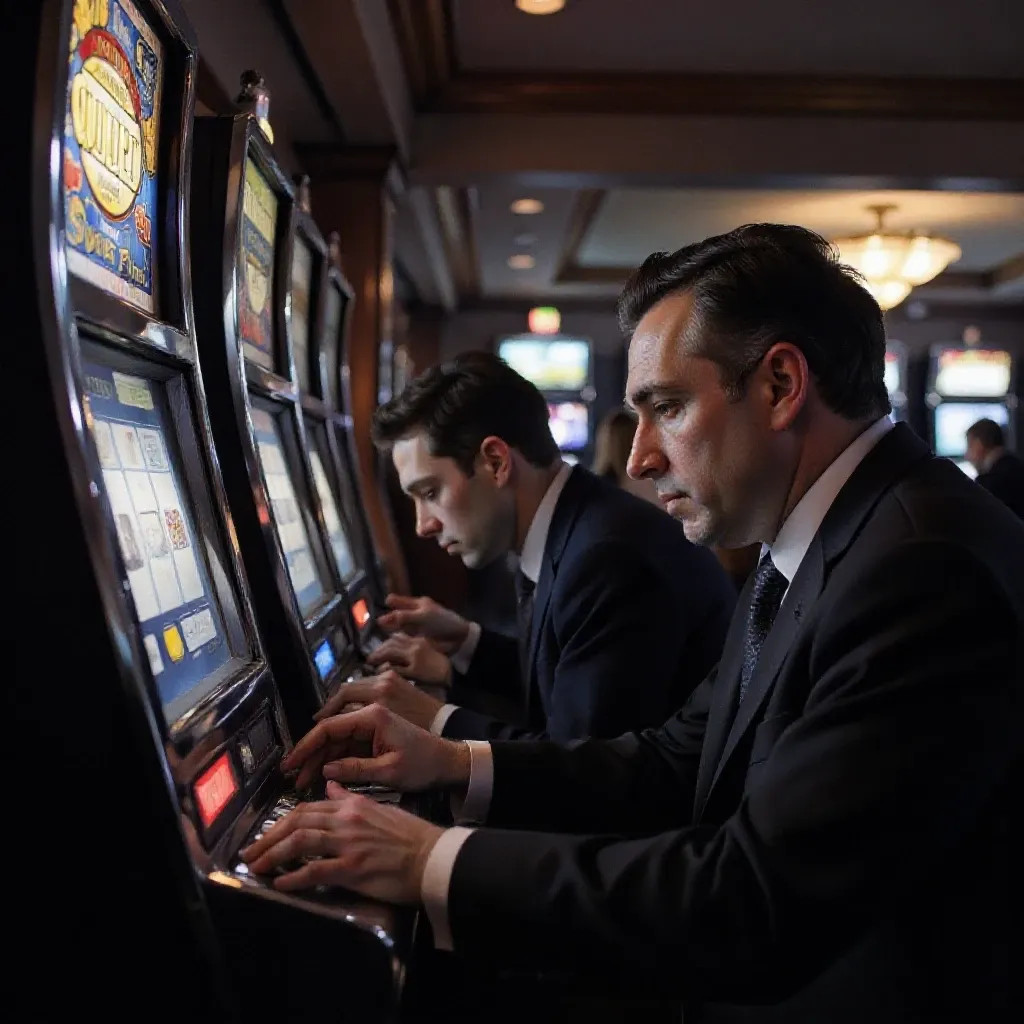
Ever felt that rush, that electric tingle, when you’re on a winning streak? It’s tempting to believe you’ve unlocked some secret, some hidden key to bending the odds in your favor. The idea that you can “train luck” in gambling is a captivating one, fueled by those fleeting moments of success. But is it real, or just a trick of the mind? This article dives deep into the psychology of gambling, separating fact from fiction and exploring why we’re so drawn to the illusion of control.
We’ll dissect the cognitive biases at play, from the gambler’s fallacy to confirmation bias, revealing how these mental shortcuts can lead us astray. Forget complex strategies and mathematical equations; understanding the psychological traps inherent in gambling is the first step to reclaiming your power. Like many, I once chased the dream of predictable wins, convinced that patterns and intuition held the key. It was a costly lesson, one that highlighted the profound influence of psychology on our choices at the table. So, can you truly train luck? Let’s unravel the truth behind the gamble.
Defining Luck and Chance
In the world of gambling, understanding the concepts of luck and chance is crucial to grasping the dynamics at play. Luck, in its purest form, refers to the unpredictable and seemingly inexplicable force that influences events in our lives. Chance, on the other hand, embodies the realm of randomness and probability. When applied to gambling, these terms often become intertwined, yet their distinction is essential.
True luck in gambling hinges on randomness – events occurring without any discernible pattern or influence from the player. Consider the classic examples of a coin flip or a dice roll. Each flip or roll is an independent event, unaffected by previous outcomes. The odds remain constant, regardless of whether tails have appeared ten times in a row. This principle of randomness is often misconstrued, leading gamblers to believe they can identify patterns in what are fundamentally random occurrences.
This misinterpretation fuels the illusion that one can somehow manipulate or predict the outcome of a game of chance. However, the reality is that true games of chance are governed by the laws of probability and the absence of predictability. The allure of gambling often lies in the perceived possibility of ‘beating the odds,’ but it’s vital to recognize that luck, at its core, is simply the manifestation of random events.
The Role of Random Number Generators
Modern online casinos and digital gambling platforms rely heavily on Random Number Generators (RNGs) to ensure fairness and unpredictability. RNGs are sophisticated algorithms and software designed to produce sequences of numbers that exhibit statistical randomness. This means that no matter how many times a specific number or value appears consecutively, the odds of that value appearing again remain the same. This is one of the core foundations by which many modern casinos operate, making luck a essential part of most games.
To guarantee the integrity of these RNGs, they often employ cryptographic security measures, making manipulation exceedingly difficult, if not impossible. Furthermore, gambling companies are subjected to rigorous testing and audits by regulatory bodies to verify the reliability and impartiality of their RNGs. These measures provide players with the assurance that the games they are engaging in are genuinely based on chance, devoid of any external influence or manipulation.

The Psychology of Gambling: Cognitive Biases
Gambling, at its core, hinges on chance, yet the human mind often struggles to accept pure randomness. This struggle gives rise to various cognitive biases that profoundly impact gamblers’ decision-making, often leading to irrational choices and significant losses. Understanding these biases is crucial for anyone who engages in gambling, as it provides a framework for recognizing and mitigating their influence.
One of the most prevalent biases is the gambler’s fallacy. This is the mistaken belief that if something happens more frequently than normal during a given period, it will happen less frequently in the future, and vice versa. For instance, a gambler might think that after a roulette wheel lands on black five times in a row, red is “due” to come up next. In reality, each spin is independent, and the odds remain the same regardless of previous outcomes. This fallacy can lead gamblers to increase their bets in a misguided attempt to capitalize on a perceived pattern.
Confirmation bias also plays a significant role. This bias involves selectively seeking out information that confirms pre-existing beliefs while ignoring contradictory evidence. A gambler who believes they have a “lucky” strategy might focus on past wins while dismissing or downplaying their losses, reinforcing their belief in the strategy’s effectiveness, even if it’s statistically unsound. This can perpetuate risky behavior and prevent gamblers from objectively assessing their performance.
Loss aversion is another powerful bias, describing the tendency to feel the pain of a loss more strongly than the pleasure of an equivalent gain. A gambler experiencing a losing streak might desperately try to recoup their losses by placing larger bets, driven by the intense desire to avoid further pain. This “chasing losses” behavior often leads to even greater financial difficulties.
Finally, the availability heuristic can distort perceptions of risk and reward. This heuristic involves overestimating the likelihood of events that are easily recalled, often due to their vividness or recency. Gamblers might overestimate their chances of winning after witnessing someone else win big, or after seeing news reports of lottery winners. The readily available image of a jackpot fuels unrealistic expectations and encourages further gambling.
How Biases Impact Decision-Making
Cognitive biases don’t exist in a vacuum; they trigger real, tangible changes within the brain. When faced with a gambling situation, these biases can activate emotional centers, overriding rational thought processes. For example, the thrill of a potential win can release dopamine, creating a sense of excitement and anticipation that clouds judgment. Conversely, a loss can trigger the release of stress hormones like cortisol, leading to impulsive decisions aimed at mitigating the negative feelings.
Emotional decision-making, driven by these chemical reactions, stands in stark contrast to rational decision-making, which relies on logic, probability, and objective analysis. A rational gambler would understand the odds of a particular game and wager accordingly, while an emotionally driven gambler might place bets based on gut feelings or superstitious beliefs.
However, gamblers can manage these scenarios by cultivating self-awareness. Recognizing the signs of cognitive biases – such as feeling overly confident after a small win or experiencing intense anxiety after a loss – is the first step. Taking a break to cool down, evaluating the real odds of the game, and setting firm limits on spending can help gamblers regain control and make more rational choices, ultimately protecting themselves from the potentially devastating consequences of biased thinking.
The Illusion of Control
The allure of gambling often lies in the mistaken belief that one can influence chance. This phenomenon, known as the illusion of control, is a cognitive bias where individuals overestimate their ability to control events that are inherently random. In the vibrant world of gambling, this manifests in a variety of peculiar behaviors.
Walk into any casino, and you’ll witness an array of superstitions and rituals. Some players blow on dice, convinced it will influence the outcome. Others meticulously choose “lucky” numbers, believing they hold some mystical power. Still others engage in elaborate pre-game rituals, convinced these actions will tip the odds in their favor. These behaviors, though seemingly irrational, stem from a deep-seated psychological need: the desire to exert control in an environment defined by uncertainty. When faced with the unpredictable nature of gambling, individuals seek ways to create a sense of agency, even if it’s entirely illusory.
This illusion is fueled by near misses and ambiguous outcomes. A near win can reinforce the belief that skill or strategy played a role, when in reality, it was simply a matter of chance. The illusion of control provides a comforting narrative, convincing gamblers that they are not merely passive recipients of fate, but active participants in shaping their own destiny. In the high-stakes world of gambling, this illusion can be a powerful, and ultimately, a costly delusion.
Can You “Train” Luck? Skill vs. Chance
The age-old debate: is it skill or just dumb luck? When it comes to games, the answer is rarely black and white. Some games are pure chance – think roulette or slots. No amount of training will let you predict where that ball will land, or what symbols the slot machine will display. These games are governed by randomness; the odds are fixed, and every spin or roll is a fresh start.
Then, you have games where skill can tip the scales. Poker is a prime example. While a lucky draw can certainly help, understanding game theory, reading opponents, and managing your bankroll are crucial for long-term success. Blackjack, especially with card counting (though casinos frown upon it!), also falls into this category.
The difference lies in the influence you have on the outcome. In skill-based games, strategic thinking and knowledge of probabilities can dramatically improve your performance. You can learn to make calculated risks, exploit your opponent’s weaknesses, and increase your chances of winning.
However, let’s be realistic. Even in games of skill, luck plays a role. A top-ranked poker player can still experience a losing streak simply due to unfavorable card distributions. The best players know how to minimize the impact of bad luck through smart decisions and disciplined play, but they can’t eliminate it entirely. Ultimately, a blend of skill and chance determines your fate.
Strategies for Managing Gambling Behavior
Responsible gambling is about enjoying the entertainment without letting it take over your life. A crucial first step is setting firm financial and time limitsbefore* you even start. Decide how much money you’re willing to spend – and absolutely no more – and stick to that budget. Similarly, determine how long you’ll gamble for and set an alarm to remind you when time’s up. Treat gambling as a form of entertainment with a fixed budget, not an investment opportunity.
Understanding the odds is also key. Gambling is designed so the house always has an edge. Don’t fall for the gambler’s fallacy – the belief that past events influence future outcomes in random games. Each spin of the roulette wheel, each hand of cards, is independent. Know that winning streaks are temporary and losses are a normal part of the process.
Cognitive restructuring can help challenge the irrational thoughts that fuel problem gambling. Learn to identify and question these biases. For example, if you find yourself thinking “I’m due for a win,” challenge that thought with the reality that each game is random. Develop healthier coping mechanisms for dealing with stress or boredom, rather than turning to gambling. Self-awareness is paramount. Recognizing the early warning signs of problem gambling – such as chasing losses, lying about gambling habits, or feeling restless when not gambling – is crucial for taking timely action. If you notice these signs, reaching out for help is a sign of strength, not weakness.
Numerous resources are available for those struggling with gambling addiction. Helplines offer confidential support and guidance. Support groups provide a safe space to share experiences and learn from others. Remember, managing gambling behavior is possible with the right strategies and support.
The importance of seeking psychological support
Professional psychologists are trained to provide effective tools for recognizing and overcoming compulsive gambling behaviors. Seeking help when you feel unable to control your gambling is a sign of courage. A therapist can guide you in becoming self-aware of when cognitive biases and compulsive patterns arise in real-time. With professional guidance, you can develop strategies to manage triggers and build a healthier relationship with gambling, or abstain from it altogether.
Conclusion
In conclusion, the allure of gambling lies deeply intertwined with the human mind. True luck, in its purest form, remains an unpredictable force, governed by chance. However, our perception of luck is often distorted by cognitive biases, leading us to believe we have more control than we actually do. This illusion of control is a potent force in gambling, driving individuals to chase losses and make irrational decisions. Understanding the psychology of gambling—recognizing these biases and the illusion of control—is the first crucial step towards fostering responsible gambling habits.
While training cannot influence random events, understanding the factors that influence gambling behavior enables self control and informed choices. By acknowledging the limits of control and recognizing the power of psychological influences, one can approach gambling with a more realistic and balanced perspective. Apply the knowledge gained here to make responsible decisions.